
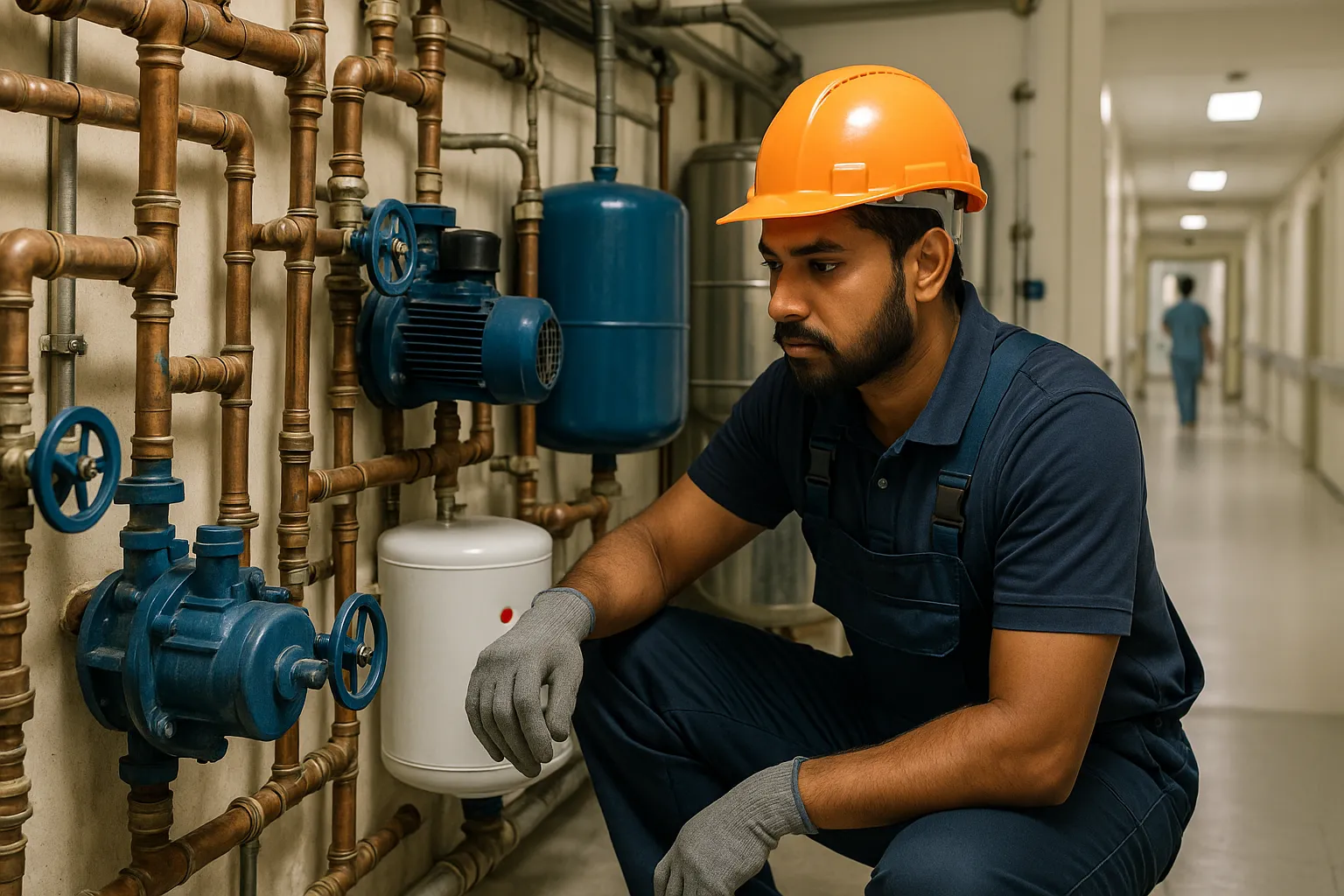
Plumbing & Water Systems Design for Hospitals - Hidden Mistakes to Avoid
Let's talk about something we often take for granted until it goes wrong: the water coming out of the tap. Now, imagine you're not in your home, but in a hospital. A patient is recovering from surgery, a doctor is scrubbing in for a life-saving procedure, and a technician is sterilizing delicate instruments. In this environment, the plumbing system isn't just a convenience; it's a vital part of patient care and safety. A single, hidden mistake in the design can have serious consequences.
Designing a plumbing system for a hospital is a complex puzzle. It's not just about getting hot water to the sink. It's about preventing deadly infections, ensuring uninterrupted operation, and creating a safe space for the most vulnerable people. We're going to walk through the most common, yet often overlooked, mistakes in hospital plumbing design and how you can avoid them. This is about building a system that protects lives from the inside out. Getting this right from the start is a core part of effective hospital planning and designing.
Why Hospital Plumbing is a Different Beast
You can't use the same blueprint for a hospital that you'd use for an office building. The stakes are exponentially higher. Hospital water systems are directly linked to patient outcomes. Think about Legionella bacteria growing in a tepid water heater, or a sudden loss of water pressure in an intensive care unit. These aren't hypotheticals; they are real risks that proper design aims to eliminate.
The goal is to create a system that is resilient, redundant, and safe. We need to plan for the unexpected and build in layers of protection. Let's break down where things often go wrong. Many of these issues are part of a larger pattern of common hospital design mistakes that can be avoided with careful forethought.
The Silent Threat: Waterborne Pathogens and Stagnation
Stagnant water is a playground for dangerous bacteria like Legionella pneumophila, which causes Legionnaires' disease, and other pathogens like Pseudomonas aeruginosa. In a large building with complex piping, dead legs—sections of pipe where water doesn't flow—are a major problem.
Common Mistakes with Water Stagnation:
- Oversized Piping and Tanks: Designing a system for "future expansion" that is too large for current demand leads to water sitting in tanks and pipes for too long.
- Unused Branches and Dead Ends: Leaving capped-off pipes from previous renovations or installing long pipe runs to a single, rarely used outlet creates perfect stagnation points.
- Poor Circulation Loop Design: Hot water circulation loops that don't maintain a high enough temperature or have low flow at the end of the line fail to keep bacteria in check.
How to Get It Right:
- Right-size your hot water storage and distribution pipes based on realistic demand calculations.
- Eliminate dead legs. No pipe branch to an outlet should be more than one pipe diameter in length from the circulating main.
- Design tight, well-insulated hot water loops with correctly sized pumps to ensure consistent temperature and flow to every point of use.
The Hot Water Balancing Act: Temperature vs. Scalding
This is a classic hospital plumbing dilemma. To kill bacteria like Legionella, you need to store and circulate hot water at a high temperature (often 140°F/60°C or above). But water at that temperature can cause severe scalds in seconds, especially for patients with limited mobility.
| Location | Target Delivery Temperature | Primary Risk | Solution |
|---|---|---|---|
| Hot Water Storage & Circulation Loop | >140°F (60°C) | Legionella Growth | Maintain high temperature system-wide. |
| Patient Room Sink, Shower, Bath | <120°F (49°C) | Scalding Injury | Install thermostatic mixing valves (TMVs) at point-of-use. |
| Surgical Scrubbing Sinks | As required by code (e.g., 110°F) | Staff Safety & Compliance | Use point-of-use or local branched TMVs. |
The biggest mistake here is trying to solve the problem by lowering the system-wide water temperature. This compromises the entire building's safety. The correct approach is to embrace the high-temperature system and then carefully control the temperature right before the water comes out of the fixture.
The Magic of Thermostatic Mixing Valves (TMVs)
TMVs are precision devices that blend hot and cold water to a safe, pre-set output temperature. But where you place them matters.
- Point-of-Use (POU) TMVs: Installed right at the sink, shower, or bath. This is the gold standard for patient areas as it offers the most precise control.
- Grouped or Zoned TMVs: A single valve serving a small group of fixtures (like a patient wing). This is more cost-effective but less precise and can lead to temperature fluctuations if not designed carefully.
Never forget maintenance! TMVs have internal parts that can fail or clog with scale. Your design must include provisions for easy access, testing, and servicing of every valve. This kind of detailed technical planning is a key component of comprehensive healthcare technology consultancy.
Backflow Prevention: Protecting the Potable Water Supply
Imagine a hose submerged in a bedpan washer, or chemical disinfectants being drawn back into the drinking water lines. This is backflow, and in a hospital, the contaminants can be particularly hazardous. A robust backflow prevention strategy is non-negotiable.
Understanding the Hazard Levels
Not all fixtures pose the same risk. The plumbing code classifies hazards to determine the level of protection needed.
Fixture Hazard Classification
| Hazard Level | Description | Common Hospital Examples | Required Protection |
|---|---|---|---|
| High Hazard (Contamination) | A cross-connection that could introduce a substance capable of causing death, illness, or spread of disease. | Autopsy tables, lab sinks, dialysis equipment, bedpan washers, hose bibs for irrigation. | Reduced Pressure Zone (RPZ) Assembly |
| Low Hazard (Pollution) | A cross-connection that could introduce a substance that degrades water quality but is not a health hazard. | Boiler feed lines, laundry equipment, some industrial process equipment. | Double Check Valve Assembly (DCVA) |
A common hidden mistake is misclassifying a fixture or forgetting one altogether. For example, an outdoor hose bib might seem harmless, but if it's used to clean a medical waste area, it becomes a high hazard. Every single point where the potable water system connects to equipment or a fixture must be assessed and protected appropriately. This meticulous attention to detail helps you avoid critical mistakes when building a hospital.
The Unseen Network: Medical Gas and Vacuum Systems
While not "plumbing" in the traditional sense, medical gas (oxygen, medical air) and vacuum systems are designed and installed by plumbing professionals and are just as critical. Mistakes here are often buried in walls and ceilings, only to be discovered during an emergency. Proper integration of these systems is a fundamental aspect of hospital MEP systems planning.
Critical Errors in Medical Gas Design:
- Inadequate Zone Valves: Not installing enough shut-off valves. During maintenance or a leak, you want to isolate the smallest possible section of the hospital, not shut down an entire floor.
- Poor Pipe Labeling: Pipes must be color-coded and labeled continuously, so anyone can instantly identify a gas line's contents and pressure.
- Ignoring Future Expansion: Not capping off future tie-in points in a main line, which forces costly and disruptive work later.
- Insufficient Outlets: Skimping on the number of oxygen and vacuum outlets in patient rooms and ICUs, limiting flexibility for patient care.
Material Selection: The Foundation of System Longevity
The materials you choose for pipes, joints, and fixtures directly impact water quality, maintenance costs, and the system's lifespan. This is a key decision point that affects your long-term operational expenses, a topic we explore in our guide on Capex vs Opex in healthcare projects.
Copper vs. PEX: A Quick Comparison
| Material | Pros | Cons | Best Use in Hospitals |
|---|---|---|---|
| Copper | Proven history, naturally bacteriostatic, durable, can handle high temperatures. | Higher cost, skilled labor required, susceptible to pitting in certain water conditions. | Hot water circulation loops, main distribution lines. |
| PEX (Cross-linked Polyethylene) | Lower cost, flexible (fewer fittings, faster installation), resistant to scale and corrosion. | Can be damaged by UV light, requires special support, questions about long-term chlorine resistance. | Cold water lines, branch lines to fixtures, radiant floor heating. |
The mistake is choosing one material for the entire job without considering its strengths and weaknesses. A hybrid approach is often best. Also, never underestimate the importance of the joining method. Solder with lead content is forbidden, and the quality of the press fittings or expansion rings is critical to prevent future leaks.
Noise and Vibration: The Overlooked Disturbance
A patient trying to rest doesn't need to hear water hammer when a toilet flushes down the hall or the constant hum of a pump. While not a life-safety issue, acoustic comfort is a key part of the healing environment and is often an afterthought in plumbing design.
- Water Hammer Arrestors: Install them near quick-closing solenoid valves (like those in dishwashers, sterilizers, and icemakers) and at the end of long pipe runs.
- Pipe Isolation: Use resilient pipe hangers and sleeves where pipes pass through walls and floors to prevent the transmission of sound and vibration.
- Pump Design: Specify pumps with variable frequency drives (VFDs) that can ramp up and down smoothly, avoiding the loud "kick" of a pump starting at full speed.
Designing for Maintenance and Resilience
A beautifully designed system is useless if it can't be maintained or fails during a crisis. You have to think like the person who will service the system in ten years. This proactive approach is a hallmark of strong hospital project management consultancy.
Building in Redundancy and Access
- Isolation Valves, Everywhere: Design the system so that any pump, water heater, or significant section of piping can be isolated for repair without shutting down the entire hospital's water supply.
- Strategic Access Panels: Don't bury critical components like TMVs, backflow preventers, and main shut-off valves behind drywall. Provide clearly labeled, lockable access panels.
- Emergency Water Supply: Have a plan for a temporary water supply connection. How will you hook up a water truck if the main breaks? Include easily accessible exterior fittings for this purpose.
Conclusion: It's About Building a Safer Environment
Designing a plumbing system for a hospital is a profound responsibility. It goes far beyond code compliance. It's about anticipating risks, understanding the unique needs of a healthcare environment, and creating a silent, reliable partner in patient care. By paying close attention to these often-hidden details—stagnation, temperature control, backflow, material selection, and maintainability—you create more than a utility. You build a layer of defense that protects patients, supports staff, and ensures the hospital can fulfill its mission without interruption. The best hospital plumbing design is the one you never have to think about because it just works, safely and reliably, day after day. For those just starting this journey, understanding when to hire a hospital project consultant can be the first step toward achieving this level of excellence.
Frequently Asked Questions (FAQs)
1. How often should a hospital's hot water system be tested for Legionella?
There's no one-size-fits-all answer, but a proactive risk management plan is key. This typically involves regular testing (quarterly or semi-annually) of high-risk areas like ICU taps, transplant unit showers, and the hot water tank itself. The frequency should be based on your facility's specific risk assessment, past test results, and any requirements from accrediting bodies like The Joint Commission.
2. Can I use PEX pipe for the entire hospital plumbing system?
While PEX has many advantages, many engineers and codes are cautious about using it for the primary hot water circulation loop in large facilities like hospitals. Copper's long track record and inherent resistance to bacterial growth often make it the preferred choice for the hot water main. PEX is excellent for cold water and branch lines, but always check with your local building and health codes and consult with a professional engineer.
3. What is the single most important feature to prevent scalding in patient bathrooms?
The thermostatic mixing valve (TMV) installed at the point-of-use is the most critical component. Unlike simple pressure-balancing valves, a TMV actually senses the temperature of the water and makes instant adjustments to keep the output consistent, even if someone flushes a toilet elsewhere in the building and changes the water pressure.
4. Our hospital is old and has long dead legs in the plumbing. What can we do without a full repipe?
A full repipe is ideal, but it's not always immediately possible. Short-term mitigation strategies include implementing a comprehensive flushing protocol where staff regularly run water through every fixture for several minutes to purge stagnant water. You can also consider installing point-of-use heaters or instant hot water heaters at distant fixtures to eliminate the need for long hot water lines. Ultimately, a plan for gradual pipe replacement should be a capital priority.
5. Who is ultimately responsible for the design of a hospital's plumbing system?
The responsibility is shared but led by a licensed Professional Engineer (PE) specializing in mechanical or plumbing engineering. They seal the design drawings, ensuring they meet all applicable codes and standards. The installing contractor is responsible for following those plans correctly, and the hospital's facilities team is then responsible for ongoing maintenance and testing. It's a chain of accountability that starts with a sound, well-thought-out design. For a new project, a hospital feasibility study can help identify these complex requirements and responsibilities from the very beginning.